Subscribe To


 Posts
All Comments
Posts
All Comments
Showing posts with label Literacy. Show all posts
Showing posts with label Literacy. Show all posts
Wednesday, 19 January 2011
How to make sure your messages reach your customers
 10:27 |
  Posted by
ATC
Posted by
ATC
Few companies realise how many of their customers have poor literacy skills and struggle with reading, writing, speaking or listening?
According to the National Literacy Trust, a staggering one in six people in the UK struggle with literacy and their skills are below the level expected of an eleven year old. This may be is a shocking statistic, but how does it impact on your business? 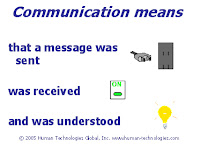 Well, if you have always found reading and writing easy, then it’s probably hard to imagine the daily struggle that people experience if they have literacy problems. Can you imagine trying to buy food in the supermarket if you can’t read what’s on the labels? How do you know which aisle to go to if you can’t read the signs?
The problem is bigger than this though as it’s not only reading and writing that people struggle with - speaking and listening can also be an issue. This doesn’t mean that someone with poor literacy skills can’t speak, but it does mean that he/she might struggle to communicate clearly in certain situations.
Not everyone will struggle to this degree, as it depends on each individual’s level of literacy, but any literacy problem is going to make everyday life more difficult.
Now let’s go back to your customers. Most businesses send out hundreds of messages in different forms – e-mails, letters, posters, fliers, phone calls, face-to-face communication etc – without thinking about how the messages will be understood by ALL of their customers.
Until you can put yourself in your customers’ shoes, it’s difficult to realise how your messages are coming across to anyone who has poor literacy skills. The National Literacy Trust launched a new campaign last November to highlight the difficulties people face on a daily basis if they have poor literacy skills. The Director of the National Literacy Trust, Jonathan Douglas, spent a whole day without speaking to highlight how important all literacy skills are, including speaking and listening, in order to communicate effectively.
 Well, if you have always found reading and writing easy, then it’s probably hard to imagine the daily struggle that people experience if they have literacy problems. Can you imagine trying to buy food in the supermarket if you can’t read what’s on the labels? How do you know which aisle to go to if you can’t read the signs?
 The problem is bigger than this though as it’s not only reading and writing that people struggle with - speaking and listening can also be an issue. This doesn’t mean that someone with poor literacy skills can’t speak, but it does mean that he/she might struggle to communicate clearly in certain situations.
Not everyone will struggle to this degree, as it depends on each individual’s level of literacy, but any literacy problem is going to make everyday life more difficult.
Now let’s go back to your customers. Most businesses send out hundreds of messages in different forms – e-mails, letters, posters, fliers, phone calls, face-to-face communication etc – without thinking about how the messages will be understood by ALL of their customers.
Until you can put yourself in your customers’ shoes, it’s difficult to realise how your messages are coming across to anyone who has poor literacy skills. The National Literacy Trust launched a new campaign last November to highlight the difficulties people face on a daily basis if they have poor literacy skills. The Director of the National Literacy Trust, Jonathan Douglas, spent a whole day without speaking to highlight how important all literacy skills are, including speaking and listening, in order to communicate effectively.
Wednesday, 24 November 2010
Should pupils be penalised for poor spelling?
01:54 |
Posted by
ATC
The recent announcement that A-Levels and GCSEs are going to be 'toughened up' with pupils losing marks for poor spelling has caused a great deal of debate. Some teachers agree and others think that it doesn't really matter and it is the content that is more important.
As an examiner for one of the major examining boards in the UK, I recently had an interesting conversation about this with a fellow examiner. We were talking about what mark should be assigned to someone who had made 8 spelling errors in an assignment of 300 words. My colleague argued that 8 errors was a very small amount as a percentage and the majority of the work was good.
Of course he was right. As a percentage, 8 errors represent 2.6% of the total amount written which is small and under the criteria we were marking the majority of the work was good. In the context of which we were marking I had to agree with my colleague, however, with my non-examining hat on I have a very different view.
Whatever pupils learn at school and later at college or university they are being prepared for ultimately getting a job and being a success in the world of work. If they're applying for a job, would 8 errors on the application form be acceptable? It may depend on who's judging it, but in a competitive market place a poorly spelt form may mean that they don't even get short-listed. Eight errors would suddenly look very different if it was shown to damage someone's job prospects.
Successful companies such as Tesco have complained about the literacy levels of school leavers and graduates so it clearly matters to many employers. No one doubts that times have changed and many people have a more relaxed view towards grammar and spelling, but surely everything should be done to ensure that schools leavers asre equipped with an acceptable standard of literacy skills and an understanding of any areas they need to improve. What do you think?
As an examiner for one of the major examining boards in the UK, I recently had an interesting conversation about this with a fellow examiner. We were talking about what mark should be assigned to someone who had made 8 spelling errors in an assignment of 300 words. My colleague argued that 8 errors was a very small amount as a percentage and the majority of the work was good.
Of course he was right. As a percentage, 8 errors represent 2.6% of the total amount written which is small and under the criteria we were marking the majority of the work was good. In the context of which we were marking I had to agree with my colleague, however, with my non-examining hat on I have a very different view.
Whatever pupils learn at school and later at college or university they are being prepared for ultimately getting a job and being a success in the world of work. If they're applying for a job, would 8 errors on the application form be acceptable? It may depend on who's judging it, but in a competitive market place a poorly spelt form may mean that they don't even get short-listed. Eight errors would suddenly look very different if it was shown to damage someone's job prospects.
Successful companies such as Tesco have complained about the literacy levels of school leavers and graduates so it clearly matters to many employers. No one doubts that times have changed and many people have a more relaxed view towards grammar and spelling, but surely everything should be done to ensure that schools leavers asre equipped with an acceptable standard of literacy skills and an understanding of any areas they need to improve. What do you think?
 Labels:
application form,
college,
grammar,
Literacy,
pupils,
school,
school leavers,
spelling,
univesity
|
Labels:
application form,
college,
grammar,
Literacy,
pupils,
school,
school leavers,
spelling,
univesity
|
 0
comments
0
comments
Monday, 18 October 2010
Reach more customers - improve your messages
10:47 |
Posted by
ATC
Do some of your customers have poor literacy skills and struggle with reading, writing, speaking or listening?
The answer is probably yes, as according to the National Literacy Trust one in six people in the UK struggle with literacy and their skills are below the level expected of an eleven year old. This may be is a shocking statistic, but how does it impact on your business?
Well, if you have always found reading and writing easy, then it’s probably hard to imagine the daily struggle that people experience if they have literacy problems. Can you imagine trying to buy food in the supermarket if you can’t read what’s on the labels? How do you know which aisle to go to if you can’t read the signs?
The problem is bigger than this though as it’s not only reading and writing that people struggle with - speaking and listening can also be an issue. This doesn’t mean that someone with poor literacy skills can’t speak, but it does mean that he/she might struggle to communicate clearly in certain situations.
Not everyone will struggle to this degree, as it depends on each individual’s level of literacy, but any literacy problem is going to make everyday life more difficult.
Now let’s go back to your customers. Most businesses send out hundreds of messages in different forms – e-mails, letters, posters, fliers, phone calls, face-to-face communication etc – without thinking about how the messages will be understood by ALL of their customers.
Until you can put yourself in your customers’ shoes, it’s difficult to realise how your messages are coming across to anyone who has poor literacy skills. To launch a new campaign, the Director of the National Literacy Trust, Jonathan Douglas, is going to try and get through the whole day on 5 November without speaking. The aim is to highlight how important all literacy skills are, including speaking and listening, in order to communicate effectively.
Learn more about how to reach more customers by following out Top Tips on Twitter

The answer is probably yes, as according to the National Literacy Trust one in six people in the UK struggle with literacy and their skills are below the level expected of an eleven year old. This may be is a shocking statistic, but how does it impact on your business?
Well, if you have always found reading and writing easy, then it’s probably hard to imagine the daily struggle that people experience if they have literacy problems. Can you imagine trying to buy food in the supermarket if you can’t read what’s on the labels? How do you know which aisle to go to if you can’t read the signs?
The problem is bigger than this though as it’s not only reading and writing that people struggle with - speaking and listening can also be an issue. This doesn’t mean that someone with poor literacy skills can’t speak, but it does mean that he/she might struggle to communicate clearly in certain situations.
Not everyone will struggle to this degree, as it depends on each individual’s level of literacy, but any literacy problem is going to make everyday life more difficult.
Now let’s go back to your customers. Most businesses send out hundreds of messages in different forms – e-mails, letters, posters, fliers, phone calls, face-to-face communication etc – without thinking about how the messages will be understood by ALL of their customers.
Until you can put yourself in your customers’ shoes, it’s difficult to realise how your messages are coming across to anyone who has poor literacy skills. To launch a new campaign, the Director of the National Literacy Trust, Jonathan Douglas, is going to try and get through the whole day on 5 November without speaking. The aim is to highlight how important all literacy skills are, including speaking and listening, in order to communicate effectively.
Learn more about how to reach more customers by following out Top Tips on Twitter
Labels:
communication strategy,
customers,
Listening,
Literacy,
Reading,
Speaking,
Writing
|
0
comments
Subscribe to:
Posts (Atom)