Subscribe To


 Posts
All Comments
Posts
All Comments
Showing posts with label communication strategy. Show all posts
Showing posts with label communication strategy. Show all posts
Monday, 31 January 2011
Are your business e-mails professional enough?
 02:29 |
  Posted by
ATC
Posted by
ATC

I’ve read lots of blogs and articles recently debating whether or not business e-mails should open with ‘Dear’, ‘Hello’, or ‘Hi’, and I’ve noticed fewer people in the UK using ‘Dear’ over the last year or so.
I’ve read with interest when people argued that ‘Dear’ is too old-fashioned or stuffy and there is no place for it in today’s business world, but is this really true? I believe there is a time and place for all of the above salutations depending on the situation and the recipient.
I’ve been corresponding by e-mail with organisations in other countries over the last year and they have all used a formal structure for business e-mails – starting an e-mail with ‘Hi’ wouldn’t have been appropriate. However, if I’m e-mailing someone I’ve met at a networking event, I usually open with ‘Hello’ as I’ve already started building a relationship with this person.
Tips for Writing a Business E-mail
- Think about who you are writing to: Sounds obvious, but people often use a standard opening regardless of the recipient and/or the culture. Sometimes ‘Dear’ will be suitable, sometimes ‘Hello’ or ‘Hi’ will be suitable – take a few seconds to think which one would be most appropriate.
- Use an opening greeting: You wouldn’t walk into a meeting and get straight down to business without saying hello, so don’t do this in a business email. Some e-mails have become so informal that they go straight into the message without any opening greeting – this can come across as rude.
- Avoid your messages being ignored: Include a clear subject line or your email could end up in the junk mail folder. Make sure the subject line matches your message - people often send e-mails backwards and forwards without changing the subject line.
- Don’t write in capitals: It’s very easy for e-mails to be misinterpreted, so avoid giving the wrong message to the recipient. Avoid writing in capitals and using exclamation marks as this can give your message a more aggressive tone.
- Check your email before you send it: Sending out an e-mail full of spelling or grammar mistakes isn’t going to present a very professional image of your company. Also, make sure your message makes sense once you’ve written it – get a colleague to read it through if necessary. It’s worth a few minutes of someone’s time if it avoids inappropriate messages being sent out.
Thursday, 20 January 2011
What’s lacking in customer service training?
01:11 |
Posted by
ATC

Whilst watching the Mary Portas programme last night, I was interested to see that sales staff in the high street retailer Pilot had only received the most basic of customer service training. This isn’t the same for all high street retailers – some staff are expected to take NVQs in customer care as part of their staff training, but there is still something important missing. Training staff in procedures is not enough – sales assistants need to understand how to communicate effectively with their customers.
The following communication tips are essential for retail staff dealing with customers:
- Language – the vocabulary that you use can totally change the message that is being given to the customer. Make sure that language used is appropriate for the target market e.g. the teenage market might be happy with slang, but will the rest of your customers?
- Grading – If customers don't understand what you are saying, don't just keep repeating the same thing more loudly and slowly! Maybe the customer doesn't understand because he/she is from another country, has literacy problems, or maybe you are just using the wrong vocabulary. Grade your language – if the customer doesn’t understand what you are saying, find another way of saying it.
- Intonation & Tone – the intonation and tone you use can change the meaning of your message. Something that is meant to be a simple instruction can sound rude or aggressive if said in the wrong way.
- Body Language – you may be saying one thing, but your body language could be saying something else. Slouching or leaning on the counter/a rail doesn’t give the right impression to customers. Standing up straight and checking your posture will give you more confidence and you will appear more professional.
- Eye Contact – make eye contact with customers when you are talking to them. This will make you appear interested in what they are saying and make you more approachable and friendly.
- Smile – nobody wants to be served by a shop assistant who looks like he/she wants to be anywhere else but in the shop. Customers want to feel welcome when they enter the store and feel that they can approach you.
Wednesday, 19 January 2011
How to make sure your messages reach your customers
10:27 |
Posted by
ATC
Few companies realise how many of their customers have poor literacy skills and struggle with reading, writing, speaking or listening?
According to the National Literacy Trust, a staggering one in six people in the UK struggle with literacy and their skills are below the level expected of an eleven year old. This may be is a shocking statistic, but how does it impact on your business? 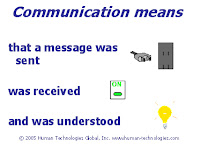 Well, if you have always found reading and writing easy, then it’s probably hard to imagine the daily struggle that people experience if they have literacy problems. Can you imagine trying to buy food in the supermarket if you can’t read what’s on the labels? How do you know which aisle to go to if you can’t read the signs?
The problem is bigger than this though as it’s not only reading and writing that people struggle with - speaking and listening can also be an issue. This doesn’t mean that someone with poor literacy skills can’t speak, but it does mean that he/she might struggle to communicate clearly in certain situations.
Not everyone will struggle to this degree, as it depends on each individual’s level of literacy, but any literacy problem is going to make everyday life more difficult.
Now let’s go back to your customers. Most businesses send out hundreds of messages in different forms – e-mails, letters, posters, fliers, phone calls, face-to-face communication etc – without thinking about how the messages will be understood by ALL of their customers.
Until you can put yourself in your customers’ shoes, it’s difficult to realise how your messages are coming across to anyone who has poor literacy skills. The National Literacy Trust launched a new campaign last November to highlight the difficulties people face on a daily basis if they have poor literacy skills. The Director of the National Literacy Trust, Jonathan Douglas, spent a whole day without speaking to highlight how important all literacy skills are, including speaking and listening, in order to communicate effectively.
 Well, if you have always found reading and writing easy, then it’s probably hard to imagine the daily struggle that people experience if they have literacy problems. Can you imagine trying to buy food in the supermarket if you can’t read what’s on the labels? How do you know which aisle to go to if you can’t read the signs?
 The problem is bigger than this though as it’s not only reading and writing that people struggle with - speaking and listening can also be an issue. This doesn’t mean that someone with poor literacy skills can’t speak, but it does mean that he/she might struggle to communicate clearly in certain situations.
Not everyone will struggle to this degree, as it depends on each individual’s level of literacy, but any literacy problem is going to make everyday life more difficult.
Now let’s go back to your customers. Most businesses send out hundreds of messages in different forms – e-mails, letters, posters, fliers, phone calls, face-to-face communication etc – without thinking about how the messages will be understood by ALL of their customers.
Until you can put yourself in your customers’ shoes, it’s difficult to realise how your messages are coming across to anyone who has poor literacy skills. The National Literacy Trust launched a new campaign last November to highlight the difficulties people face on a daily basis if they have poor literacy skills. The Director of the National Literacy Trust, Jonathan Douglas, spent a whole day without speaking to highlight how important all literacy skills are, including speaking and listening, in order to communicate effectively.
Monday, 18 October 2010
Reach more customers - improve your messages
10:47 |
Posted by
ATC
Do some of your customers have poor literacy skills and struggle with reading, writing, speaking or listening?
The answer is probably yes, as according to the National Literacy Trust one in six people in the UK struggle with literacy and their skills are below the level expected of an eleven year old. This may be is a shocking statistic, but how does it impact on your business?
Well, if you have always found reading and writing easy, then it’s probably hard to imagine the daily struggle that people experience if they have literacy problems. Can you imagine trying to buy food in the supermarket if you can’t read what’s on the labels? How do you know which aisle to go to if you can’t read the signs?
The problem is bigger than this though as it’s not only reading and writing that people struggle with - speaking and listening can also be an issue. This doesn’t mean that someone with poor literacy skills can’t speak, but it does mean that he/she might struggle to communicate clearly in certain situations.
Not everyone will struggle to this degree, as it depends on each individual’s level of literacy, but any literacy problem is going to make everyday life more difficult.
Now let’s go back to your customers. Most businesses send out hundreds of messages in different forms – e-mails, letters, posters, fliers, phone calls, face-to-face communication etc – without thinking about how the messages will be understood by ALL of their customers.
Until you can put yourself in your customers’ shoes, it’s difficult to realise how your messages are coming across to anyone who has poor literacy skills. To launch a new campaign, the Director of the National Literacy Trust, Jonathan Douglas, is going to try and get through the whole day on 5 November without speaking. The aim is to highlight how important all literacy skills are, including speaking and listening, in order to communicate effectively.
Learn more about how to reach more customers by following out Top Tips on Twitter

The answer is probably yes, as according to the National Literacy Trust one in six people in the UK struggle with literacy and their skills are below the level expected of an eleven year old. This may be is a shocking statistic, but how does it impact on your business?
Well, if you have always found reading and writing easy, then it’s probably hard to imagine the daily struggle that people experience if they have literacy problems. Can you imagine trying to buy food in the supermarket if you can’t read what’s on the labels? How do you know which aisle to go to if you can’t read the signs?
The problem is bigger than this though as it’s not only reading and writing that people struggle with - speaking and listening can also be an issue. This doesn’t mean that someone with poor literacy skills can’t speak, but it does mean that he/she might struggle to communicate clearly in certain situations.
Not everyone will struggle to this degree, as it depends on each individual’s level of literacy, but any literacy problem is going to make everyday life more difficult.
Now let’s go back to your customers. Most businesses send out hundreds of messages in different forms – e-mails, letters, posters, fliers, phone calls, face-to-face communication etc – without thinking about how the messages will be understood by ALL of their customers.
Until you can put yourself in your customers’ shoes, it’s difficult to realise how your messages are coming across to anyone who has poor literacy skills. To launch a new campaign, the Director of the National Literacy Trust, Jonathan Douglas, is going to try and get through the whole day on 5 November without speaking. The aim is to highlight how important all literacy skills are, including speaking and listening, in order to communicate effectively.
Learn more about how to reach more customers by following out Top Tips on Twitter
 Labels:
communication strategy,
customers,
Listening,
Literacy,
Reading,
Speaking,
Writing
|
Labels:
communication strategy,
customers,
Listening,
Literacy,
Reading,
Speaking,
Writing
|
 0
comments
0
comments
Friday, 15 October 2010
How does the language you use affect your business?
00:52 |
Posted by
ATC

The answer to this question is yes for the majority of businesses in the UK, yet very few organisations think about how the language they use will impact on their customers and clients. Organisations are seriously limiting the number of customers they can reach by not reviewing their communication strategy.
Let’s consider the first question again: Are some of your customers and potential customers from other countries? The answer is yes they are. According to the Office for National Statistics, ‘The number of people from overseas living in the UK reached a record high of 6.7 million.’
So, the chances are pretty high that a large percentage of your customers and clients use English as a second language. Communicating with someone who isn’t a native English speaker isn’t a problem though, is it? The majority of us have come into contact with people from other countries around the world in our everyday lives or when we go on a foreign holiday. Most of us have some experience of communicating with people from other countries.
Stop and think for a moment. Have you always been able to get your message across? How do you know if the other person has really understood? Often we assume that we’ve explained ourselves clearly, but have we really? Being a native English speaker and using English everyday doesn’t mean we naturally know how to adapt our language to different situation and for different people.
In business, thinking you’ve got your message across isn’t good enough. In order to retain existing customers and attract new ones it’s vital to be certain that you’ve put your message across clearly and concisely.
Learn more about how to get you message across to a wider customer base by following our ‘Top Tips’ on Twitter.
Subscribe to:
Posts (Atom)