Subscribe To


 Posts
All Comments
Posts
All Comments
Showing posts with label customer service. Show all posts
Showing posts with label customer service. Show all posts
Wednesday, 13 April 2011
7 Top Communication Tips for Retail Staff
 03:07 |
  Posted by
ATC
Posted by
ATC

I was in one of the big supermarkets yesterday and couldn’t find the product I was looking for, so I stopped one of the sales assistants to ask for help. I was surprised by the assistant’s response as she looked panicked and said she had no idea where the product would be and told me to ask someone else. I then approached another assistant and got the same response! Finally with assistant number three, I was taken to the correct aisle and he found the product for me.
Maybe these two sales assistants were new to the job or maybe they were both having a bad day, but either way, they weren’t providing very good customer service. This got me wondering about how much training staff in this store were receiving.
I worked part-time in a few different High Street stores when I was at university and I remember that we received the most basic training, but I believe that I still offered good service to the customers who came into the shop because I used my common sense. However, retailers can’t simply rely on all staff using common sense and understanding how customers should be treated. Sales assistants need to understand how to communicate effectively with their customers and it is up to retailers to provide this training.
7 essential communication tips for retail staff dealing with customers:
- Language – the vocabulary that you use can totally change the message that is being given to the customer. Make sure that language used is appropriate for the target market e.g. the teenage market might be happy with slang, but will the rest of your customers?
- Grading – If customers don't understand what you are saying, don't just keep repeating the same thing more loudly and slowly! Maybe the customer doesn't understand because he/she is from another country, has literacy problems, or maybe you are just using the wrong vocabulary. Grade your language – if the customer doesn’t understand what you are saying, find another way of saying it.
- Intonation & Tone – the intonation and tone you use can change the meaning of your message. Something that is meant to be a simple instruction can sound rude or aggressive if said in the wrong way.
- Body Language – you may be saying one thing, but your body language could be saying something else. Looking bored/uninterested or panicked doesn’t give the right impression to customers. Dealing with customers in a confident manner will make you appear more professional.
- Eye Contact – make eye contact with customers when you are talking to them. This will make you appear interested in what they are saying and make you more approachable and friendly.
- Smile – nobody wants to be served by a shop assistant who looks like he/she wants to be anywhere else but in the shop. Customers want to feel welcome when they enter the store and feel that they can approach you.
- Find someone who can – if you really can’t help the customer then find someone who can. Either direct the customer to the correct person/counter or take them there yourself – don’t just say you don’t know and walk away!
 Labels:

Thursday, 20 January 2011
What’s lacking in customer service training?
01:11 |
Posted by
ATC

Whilst watching the Mary Portas programme last night, I was interested to see that sales staff in the high street retailer Pilot had only received the most basic of customer service training. This isn’t the same for all high street retailers – some staff are expected to take NVQs in customer care as part of their staff training, but there is still something important missing. Training staff in procedures is not enough – sales assistants need to understand how to communicate effectively with their customers.
The following communication tips are essential for retail staff dealing with customers:
- Language – the vocabulary that you use can totally change the message that is being given to the customer. Make sure that language used is appropriate for the target market e.g. the teenage market might be happy with slang, but will the rest of your customers?
- Grading – If customers don't understand what you are saying, don't just keep repeating the same thing more loudly and slowly! Maybe the customer doesn't understand because he/she is from another country, has literacy problems, or maybe you are just using the wrong vocabulary. Grade your language – if the customer doesn’t understand what you are saying, find another way of saying it.
- Intonation & Tone – the intonation and tone you use can change the meaning of your message. Something that is meant to be a simple instruction can sound rude or aggressive if said in the wrong way.
- Body Language – you may be saying one thing, but your body language could be saying something else. Slouching or leaning on the counter/a rail doesn’t give the right impression to customers. Standing up straight and checking your posture will give you more confidence and you will appear more professional.
- Eye Contact – make eye contact with customers when you are talking to them. This will make you appear interested in what they are saying and make you more approachable and friendly.
- Smile – nobody wants to be served by a shop assistant who looks like he/she wants to be anywhere else but in the shop. Customers want to feel welcome when they enter the store and feel that they can approach you.
Wednesday, 19 January 2011
How to make sure your messages reach your customers
10:27 |
Posted by
ATC
Few companies realise how many of their customers have poor literacy skills and struggle with reading, writing, speaking or listening?
According to the National Literacy Trust, a staggering one in six people in the UK struggle with literacy and their skills are below the level expected of an eleven year old. This may be is a shocking statistic, but how does it impact on your business? 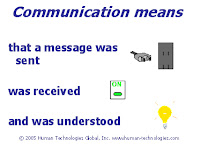 Well, if you have always found reading and writing easy, then it’s probably hard to imagine the daily struggle that people experience if they have literacy problems. Can you imagine trying to buy food in the supermarket if you can’t read what’s on the labels? How do you know which aisle to go to if you can’t read the signs?
The problem is bigger than this though as it’s not only reading and writing that people struggle with - speaking and listening can also be an issue. This doesn’t mean that someone with poor literacy skills can’t speak, but it does mean that he/she might struggle to communicate clearly in certain situations.
Not everyone will struggle to this degree, as it depends on each individual’s level of literacy, but any literacy problem is going to make everyday life more difficult.
Now let’s go back to your customers. Most businesses send out hundreds of messages in different forms – e-mails, letters, posters, fliers, phone calls, face-to-face communication etc – without thinking about how the messages will be understood by ALL of their customers.
Until you can put yourself in your customers’ shoes, it’s difficult to realise how your messages are coming across to anyone who has poor literacy skills. The National Literacy Trust launched a new campaign last November to highlight the difficulties people face on a daily basis if they have poor literacy skills. The Director of the National Literacy Trust, Jonathan Douglas, spent a whole day without speaking to highlight how important all literacy skills are, including speaking and listening, in order to communicate effectively.
 Well, if you have always found reading and writing easy, then it’s probably hard to imagine the daily struggle that people experience if they have literacy problems. Can you imagine trying to buy food in the supermarket if you can’t read what’s on the labels? How do you know which aisle to go to if you can’t read the signs?
 The problem is bigger than this though as it’s not only reading and writing that people struggle with - speaking and listening can also be an issue. This doesn’t mean that someone with poor literacy skills can’t speak, but it does mean that he/she might struggle to communicate clearly in certain situations.
Not everyone will struggle to this degree, as it depends on each individual’s level of literacy, but any literacy problem is going to make everyday life more difficult.
Now let’s go back to your customers. Most businesses send out hundreds of messages in different forms – e-mails, letters, posters, fliers, phone calls, face-to-face communication etc – without thinking about how the messages will be understood by ALL of their customers.
Until you can put yourself in your customers’ shoes, it’s difficult to realise how your messages are coming across to anyone who has poor literacy skills. The National Literacy Trust launched a new campaign last November to highlight the difficulties people face on a daily basis if they have poor literacy skills. The Director of the National Literacy Trust, Jonathan Douglas, spent a whole day without speaking to highlight how important all literacy skills are, including speaking and listening, in order to communicate effectively.
Friday, 29 October 2010
Slamming the phone down on customers is not part of the service!
04:05 |
Posted by
ATC
I’ve received four calls this week from call centres overseas asking to speak to my partner and each one has ended with the caller putting the phone down on me!
 On each occasion, the following has taken place: I’ve answered the call, rather than a man, as they were expecting, and they’ve instantly assumed that I’m the ‘wife’ and started calling me Mrs Smith. I realise that this is a cultural difference, but my response is always, “There’s no Mrs Smith here? which instantly throws them.
If they don’t put the phone down at this point, I ask who’s calling, which they are always reluctant to tell me. I find this very strange as they are either calling to speak to my partner because he’s one of their customers, or they are hoping he’ll be a potential customer – either way it surely makes sense to give the company’s name!
After insisting that they tell me who’s calling for a few seconds longer, the call always ends with them putting the phone down on me. Now I admit that I am winding these callers up slightly, but I can’t believe that it’s part of any company’s customer service plan to put the phone down on customers.
I’ve also noticed that once I start asking questions that seem to deviate from the script the caller is following, he/she is unable to continue with the conversation.
If companies decide to relocate their call centres and customer service centres overseas, why oh why don’t they provide better training for the staff working in these centres? I’ve worked with students and clients from many different countries for the last 16 years and I understand that it’s difficult to teach someone how to act in a different cultural setting, but it certainly isn’t impossible.
If you are going to base your call centres overseas, train your staff properly!
Now where’s that number to block cold calls…?
Sunday, 4 July 2010
Customer Service Skills
15:32 |
Posted by
ATC
In the last two weeks I have wondered why so many firms have adopted a standard script for their staff in call centres. I'm sure I'm not alone in feeling irritated before I even get to talk to someone having listened to endless messages about how important it is that they 'connect you to the right area'. Hmm.
When you eventually get to talk to a person rather than a machine - after asking for a number or your name. Do you mind if I call you ...(first name) they ask?' Well yes I do actually, because I don't know you. Old fashioned perhaps - but I don't like it. Equally annoying is 'How are you today?' I have to stop myself saying "Does it matter?" I don't actually want to discuss it with a complete stranger.
Last week I was trying to get a dongle I had bought activated. The nice young woman wanted to ask me all sorts of things such as 'Was I married?' I'm sorry, but what does this have to do with activating a dongle that I had already paid for? Barely concealing my irritation she continued to speak to the standard script.

My experience is hardly unique and although I have examples of excellent customer service, too many times it is mediocre at best. I think firms should review their training for front line staff and how they choose to communicate with their customers and see how it can be improved. Yes money is tight and for some organisations, training won't be seen as a priority, but in these difficult economic times, it could make a considerable difference to your business.
When you eventually get to talk to a person rather than a machine - after asking for a number or your name. Do you mind if I call you ...(first name) they ask?' Well yes I do actually, because I don't know you. Old fashioned perhaps - but I don't like it. Equally annoying is 'How are you today?' I have to stop myself saying "Does it matter?" I don't actually want to discuss it with a complete stranger.
Last week I was trying to get a dongle I had bought activated. The nice young woman wanted to ask me all sorts of things such as 'Was I married?' I'm sorry, but what does this have to do with activating a dongle that I had already paid for? Barely concealing my irritation she continued to speak to the standard script.
When I was asked to confirm my address she repeated "fantastic!" after every line. By the time I rang off she had said it at least 23 times - and yes I did mark it down on paper. When I challenged anything she said - the line went silent and I had to keep asking if she was still there. It was clear that she wasn't allowed to deviate from the standard script, and therefore was unable to answer my questions. She did feel my pain by telling me that 'she understood how irritating it must be for you.' By the time I rang off I was nearly at screaming point and had a headache. I also vowed that I would never deal with the firm again after my contract expires.
My experience is hardly unique and although I have examples of excellent customer service, too many times it is mediocre at best. I think firms should review their training for front line staff and how they choose to communicate with their customers and see how it can be improved. Yes money is tight and for some organisations, training won't be seen as a priority, but in these difficult economic times, it could make a considerable difference to your business.
Subscribe to:
Posts (Atom)