Subscribe To


 Posts
All Comments
Posts
All Comments
Wednesday, 13 April 2011
7 Top Communication Tips for Retail Staff
 03:07 |
  Posted by
ATC
Posted by
ATC

I was in one of the big supermarkets yesterday and couldn’t find the product I was looking for, so I stopped one of the sales assistants to ask for help. I was surprised by the assistant’s response as she looked panicked and said she had no idea where the product would be and told me to ask someone else. I then approached another assistant and got the same response! Finally with assistant number three, I was taken to the correct aisle and he found the product for me.
Maybe these two sales assistants were new to the job or maybe they were both having a bad day, but either way, they weren’t providing very good customer service. This got me wondering about how much training staff in this store were receiving.
I worked part-time in a few different High Street stores when I was at university and I remember that we received the most basic training, but I believe that I still offered good service to the customers who came into the shop because I used my common sense. However, retailers can’t simply rely on all staff using common sense and understanding how customers should be treated. Sales assistants need to understand how to communicate effectively with their customers and it is up to retailers to provide this training.
7 essential communication tips for retail staff dealing with customers:
- Language – the vocabulary that you use can totally change the message that is being given to the customer. Make sure that language used is appropriate for the target market e.g. the teenage market might be happy with slang, but will the rest of your customers?
- Grading – If customers don't understand what you are saying, don't just keep repeating the same thing more loudly and slowly! Maybe the customer doesn't understand because he/she is from another country, has literacy problems, or maybe you are just using the wrong vocabulary. Grade your language – if the customer doesn’t understand what you are saying, find another way of saying it.
- Intonation & Tone – the intonation and tone you use can change the meaning of your message. Something that is meant to be a simple instruction can sound rude or aggressive if said in the wrong way.
- Body Language – you may be saying one thing, but your body language could be saying something else. Looking bored/uninterested or panicked doesn’t give the right impression to customers. Dealing with customers in a confident manner will make you appear more professional.
- Eye Contact – make eye contact with customers when you are talking to them. This will make you appear interested in what they are saying and make you more approachable and friendly.
- Smile – nobody wants to be served by a shop assistant who looks like he/she wants to be anywhere else but in the shop. Customers want to feel welcome when they enter the store and feel that they can approach you.
- Find someone who can – if you really can’t help the customer then find someone who can. Either direct the customer to the correct person/counter or take them there yourself – don’t just say you don’t know and walk away!
 Labels:

Tuesday, 8 March 2011
5 Reasons why you should state the obvious for your customers
04:49 |
Posted by
ATC
 |
| Photo by Yuri Arcus |
Why is it that so many organisations think that certain things should be perfectly obvious to their customers and there is no need for them to explain? It’s no secret that the most successful companies genuinely put customer service at the heart of everything they do and will constantly review and update their policies, procedures and staff training to ensure this is always the case. Too many organisations are either not bothered or are clueless about the potential impact of their disinterest on their customers.
I was recently sent a database from a company I was working with, which included names, email addresses, company address, etc. I looked briefly at this information with a member of the company and everything seemed in order. When I reopened the file later on I was surprised to find that I didn’t have any telephone numbers. This was really annoying and I spent the weekend trying to track down some of the numbers. When I phoned the company at the first opportunity on Monday morning, my question was “Should I have received any telephone numbers?”. The member of staff sounded incredulous and I was told I had indeed received them. “But I can’t see them I said” – “You just need to expand column L” came the reply. Gritting my teeth I explained that I had expanded column L already, but there weren’t any telephone numbers. It turns out that column L marked “Customer Data 1” – was the telephone number with the first 0 missing.Grr!!
There were four main issues that arose from this encounter.
I was recently sent a database from a company I was working with, which included names, email addresses, company address, etc. I looked briefly at this information with a member of the company and everything seemed in order. When I reopened the file later on I was surprised to find that I didn’t have any telephone numbers. This was really annoying and I spent the weekend trying to track down some of the numbers. When I phoned the company at the first opportunity on Monday morning, my question was “Should I have received any telephone numbers?”. The member of staff sounded incredulous and I was told I had indeed received them. “But I can’t see them I said” – “You just need to expand column L” came the reply. Gritting my teeth I explained that I had expanded column L already, but there weren’t any telephone numbers. It turns out that column L marked “Customer Data 1” – was the telephone number with the first 0 missing.Grr!!
There were four main issues that arose from this encounter.
- Poor instructions: I didn’t know that customer data 1 referred to telephone numbers. (I had not been told this when he told me about the spreadsheet.) The member of staff's response to my apparent ignorance when I said I thought it was a customer number to distinguish individual customers was to tell me that no other customer had ever thought that.
- The importance of context: I had never seen a telephone with the 0 missing unless it had been replaced with an overseas code (which these hadn’t). I’m a trained teacher and have never said that you may see telephone numbers with the 0 missing. This time I was told “It’s the way the system does it.” There was no inclination on the member of staff to try and understand the context of me as a customer.
- No recognition or acknowledgement to review practices: Even though I tried to explain quite politely that he might want to review his practice for the future, it was quite clear that he wasn’t going t do this. From an unscientific straw poll that I took from some friends who work in different professions not one of them when presented with a set of similar set of information thought they were the telephone numbers.
- No responsibility/No apology : Perhaps I should have realised that the numbers were telephone numbers, but the fact is, as the customer, I expected an apology from the company and not to receive one is poor customer service. I wasted a lot of my valuable time looking up telephone numbers.
- Assumptions were made: The company member of staff had assumed that I would understand their systems without explanation. Why? Why would I? Once again this is just poor customer service. It might have been obvious to him that Column L was full of telephone numbers, but it wasn’t to me.
So here are 5 reasons why you should state the ‘obvious’
- Customers don’t have an understanding of your company systems and processes.
- Customers operate in their own context which directly impacts on how they ‘see the world’ including your services and products.
- Disenchanted customers will not return if they have to waste time and money finding things out
- You have no idea of the level of the communication skills of your customers. You can’t make assumptions and therefore it’s better to state the obvious.
- Good customer service, including clear instructions will increase sales.
It’s obvious isn’t it!.
Photograph by Yuri Arcus
Monday, 31 January 2011
Are your business e-mails professional enough?
02:29 |
Posted by
ATC

I’ve read lots of blogs and articles recently debating whether or not business e-mails should open with ‘Dear’, ‘Hello’, or ‘Hi’, and I’ve noticed fewer people in the UK using ‘Dear’ over the last year or so.
I’ve read with interest when people argued that ‘Dear’ is too old-fashioned or stuffy and there is no place for it in today’s business world, but is this really true? I believe there is a time and place for all of the above salutations depending on the situation and the recipient.
I’ve been corresponding by e-mail with organisations in other countries over the last year and they have all used a formal structure for business e-mails – starting an e-mail with ‘Hi’ wouldn’t have been appropriate. However, if I’m e-mailing someone I’ve met at a networking event, I usually open with ‘Hello’ as I’ve already started building a relationship with this person.
Tips for Writing a Business E-mail
- Think about who you are writing to: Sounds obvious, but people often use a standard opening regardless of the recipient and/or the culture. Sometimes ‘Dear’ will be suitable, sometimes ‘Hello’ or ‘Hi’ will be suitable – take a few seconds to think which one would be most appropriate.
- Use an opening greeting: You wouldn’t walk into a meeting and get straight down to business without saying hello, so don’t do this in a business email. Some e-mails have become so informal that they go straight into the message without any opening greeting – this can come across as rude.
- Avoid your messages being ignored: Include a clear subject line or your email could end up in the junk mail folder. Make sure the subject line matches your message - people often send e-mails backwards and forwards without changing the subject line.
- Don’t write in capitals: It’s very easy for e-mails to be misinterpreted, so avoid giving the wrong message to the recipient. Avoid writing in capitals and using exclamation marks as this can give your message a more aggressive tone.
- Check your email before you send it: Sending out an e-mail full of spelling or grammar mistakes isn’t going to present a very professional image of your company. Also, make sure your message makes sense once you’ve written it – get a colleague to read it through if necessary. It’s worth a few minutes of someone’s time if it avoids inappropriate messages being sent out.
Thursday, 20 January 2011
What’s lacking in customer service training?
01:11 |
Posted by
ATC

Whilst watching the Mary Portas programme last night, I was interested to see that sales staff in the high street retailer Pilot had only received the most basic of customer service training. This isn’t the same for all high street retailers – some staff are expected to take NVQs in customer care as part of their staff training, but there is still something important missing. Training staff in procedures is not enough – sales assistants need to understand how to communicate effectively with their customers.
The following communication tips are essential for retail staff dealing with customers:
- Language – the vocabulary that you use can totally change the message that is being given to the customer. Make sure that language used is appropriate for the target market e.g. the teenage market might be happy with slang, but will the rest of your customers?
- Grading – If customers don't understand what you are saying, don't just keep repeating the same thing more loudly and slowly! Maybe the customer doesn't understand because he/she is from another country, has literacy problems, or maybe you are just using the wrong vocabulary. Grade your language – if the customer doesn’t understand what you are saying, find another way of saying it.
- Intonation & Tone – the intonation and tone you use can change the meaning of your message. Something that is meant to be a simple instruction can sound rude or aggressive if said in the wrong way.
- Body Language – you may be saying one thing, but your body language could be saying something else. Slouching or leaning on the counter/a rail doesn’t give the right impression to customers. Standing up straight and checking your posture will give you more confidence and you will appear more professional.
- Eye Contact – make eye contact with customers when you are talking to them. This will make you appear interested in what they are saying and make you more approachable and friendly.
- Smile – nobody wants to be served by a shop assistant who looks like he/she wants to be anywhere else but in the shop. Customers want to feel welcome when they enter the store and feel that they can approach you.
Wednesday, 19 January 2011
How to make sure your messages reach your customers
10:27 |
Posted by
ATC
Few companies realise how many of their customers have poor literacy skills and struggle with reading, writing, speaking or listening?
According to the National Literacy Trust, a staggering one in six people in the UK struggle with literacy and their skills are below the level expected of an eleven year old. This may be is a shocking statistic, but how does it impact on your business? 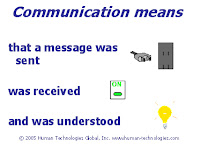 Well, if you have always found reading and writing easy, then it’s probably hard to imagine the daily struggle that people experience if they have literacy problems. Can you imagine trying to buy food in the supermarket if you can’t read what’s on the labels? How do you know which aisle to go to if you can’t read the signs?
The problem is bigger than this though as it’s not only reading and writing that people struggle with - speaking and listening can also be an issue. This doesn’t mean that someone with poor literacy skills can’t speak, but it does mean that he/she might struggle to communicate clearly in certain situations.
Not everyone will struggle to this degree, as it depends on each individual’s level of literacy, but any literacy problem is going to make everyday life more difficult.
Now let’s go back to your customers. Most businesses send out hundreds of messages in different forms – e-mails, letters, posters, fliers, phone calls, face-to-face communication etc – without thinking about how the messages will be understood by ALL of their customers.
Until you can put yourself in your customers’ shoes, it’s difficult to realise how your messages are coming across to anyone who has poor literacy skills. The National Literacy Trust launched a new campaign last November to highlight the difficulties people face on a daily basis if they have poor literacy skills. The Director of the National Literacy Trust, Jonathan Douglas, spent a whole day without speaking to highlight how important all literacy skills are, including speaking and listening, in order to communicate effectively.
 Well, if you have always found reading and writing easy, then it’s probably hard to imagine the daily struggle that people experience if they have literacy problems. Can you imagine trying to buy food in the supermarket if you can’t read what’s on the labels? How do you know which aisle to go to if you can’t read the signs?
 The problem is bigger than this though as it’s not only reading and writing that people struggle with - speaking and listening can also be an issue. This doesn’t mean that someone with poor literacy skills can’t speak, but it does mean that he/she might struggle to communicate clearly in certain situations.
Not everyone will struggle to this degree, as it depends on each individual’s level of literacy, but any literacy problem is going to make everyday life more difficult.
Now let’s go back to your customers. Most businesses send out hundreds of messages in different forms – e-mails, letters, posters, fliers, phone calls, face-to-face communication etc – without thinking about how the messages will be understood by ALL of their customers.
Until you can put yourself in your customers’ shoes, it’s difficult to realise how your messages are coming across to anyone who has poor literacy skills. The National Literacy Trust launched a new campaign last November to highlight the difficulties people face on a daily basis if they have poor literacy skills. The Director of the National Literacy Trust, Jonathan Douglas, spent a whole day without speaking to highlight how important all literacy skills are, including speaking and listening, in order to communicate effectively.
Sunday, 2 January 2011
10 Worst mistakes made by first time managers
13:49 |
Posted by
ATC
I remember when I got my first time management job; I was so happy that I danced around my lounge with my husband. I didn’t even mind too much when my dog who wanted to join in the fun, jumped up and bit me on the bottom, tearing my best trousers in the process.
The euphoria I felt on finding that I had got my first management job, probably lasted into the second week, when I was holding a staff meeting and I suddenly realised the scale of the task in front of me. I had no previous experience of management, no training and as the post was completely new – no one to ask how to do it.
Of course, I made lots of mistakes, but I like to think that I made fewer than I might have because I did a lot of listening to other managers, my team and other staff, and I never stopped listening and learning.
Listed below is a list of the 10 worst mistakes that first time managers make:
1. Wanting to show who’s boss – As a first time manager it’s normal to want to make it clear that you’re in charge, particularly if there’s some resentment about your appointment. Be clear, fair and firm – but do not be superior or belittle your staff.
2. Failing to communicate effectively – There are many communication pitfalls for a first time manager but one of the worst ones is not agreeing with your team about how you will communicate and how regularly – e.g. team meetings, emails, phone calls , 1 to 1 meetings
3. Making change for changes sake – First time managers are often under pressure to make quick changes to working procedures. Try and resist the pressure to act hastily and observe what is currently being done, and make sure you listen to other views.
4. Failing to listen – By not listening, the first time manager often falls into the trap of introducing a new process or procedure and unwittingly reinventing the wheel. Listen to other people.
5. Always being the expert- Most first time managers are appointed because they were good at their previous job. However, you should avoid always being the ‘expert’. Let other people in your team/area share their knowledge and expertise.
6. Ignoring different communication and working styles – First time manages need to be aware that some of their staff will have very different communication and working styles. Familiarise yourself with these different styles in order to engage with your staff. If it works effectively don’t try and change it.
7. ‘Doing’ the job instead of managing – First time managers can be tempted to almost fall over themselves to be seen doing the job well, which can lead to them ‘doing’ instead of ‘managing’.
8. Not saying no – It can be very hard to say ‘no’ as a first time manager – particularly if you don’t think you should. However, it is one of the key skills to adopt when first appointed, as you will need to be able to say no if you are being asked to do too much.
9. Working too many hours – working late, taking work home and skipping lunch hours are bad habits that first time managers often adopt. Don’t. There’ll always be more work if you look for it. You are entitled to a home life and skipping your lunch break is unhealthy.
10. Not asking for help – As a manager, it is easy to think that you should be able to do everything. If you need help in any area of your work, then don’t be ashamed to ask.

The euphoria I felt on finding that I had got my first management job, probably lasted into the second week, when I was holding a staff meeting and I suddenly realised the scale of the task in front of me. I had no previous experience of management, no training and as the post was completely new – no one to ask how to do it.
Of course, I made lots of mistakes, but I like to think that I made fewer than I might have because I did a lot of listening to other managers, my team and other staff, and I never stopped listening and learning.
Listed below is a list of the 10 worst mistakes that first time managers make:
1. Wanting to show who’s boss – As a first time manager it’s normal to want to make it clear that you’re in charge, particularly if there’s some resentment about your appointment. Be clear, fair and firm – but do not be superior or belittle your staff.
2. Failing to communicate effectively – There are many communication pitfalls for a first time manager but one of the worst ones is not agreeing with your team about how you will communicate and how regularly – e.g. team meetings, emails, phone calls , 1 to 1 meetings
3. Making change for changes sake – First time managers are often under pressure to make quick changes to working procedures. Try and resist the pressure to act hastily and observe what is currently being done, and make sure you listen to other views.
4. Failing to listen – By not listening, the first time manager often falls into the trap of introducing a new process or procedure and unwittingly reinventing the wheel. Listen to other people.
5. Always being the expert- Most first time managers are appointed because they were good at their previous job. However, you should avoid always being the ‘expert’. Let other people in your team/area share their knowledge and expertise.
6. Ignoring different communication and working styles – First time manages need to be aware that some of their staff will have very different communication and working styles. Familiarise yourself with these different styles in order to engage with your staff. If it works effectively don’t try and change it.
7. ‘Doing’ the job instead of managing – First time managers can be tempted to almost fall over themselves to be seen doing the job well, which can lead to them ‘doing’ instead of ‘managing’.
8. Not saying no – It can be very hard to say ‘no’ as a first time manager – particularly if you don’t think you should. However, it is one of the key skills to adopt when first appointed, as you will need to be able to say no if you are being asked to do too much.
9. Working too many hours – working late, taking work home and skipping lunch hours are bad habits that first time managers often adopt. Don’t. There’ll always be more work if you look for it. You are entitled to a home life and skipping your lunch break is unhealthy.
10. Not asking for help – As a manager, it is easy to think that you should be able to do everything. If you need help in any area of your work, then don’t be ashamed to ask.
Monday, 6 December 2010
Communicating with customers in the 'Big Freeze"
03:12 |
Posted by
ATC

Contrast the train companies attitude to customers to that of Thames Water. Water leaks are an ongoing problem for water companies, but they become worse in winter as drains get blocked, pipes freeze and crack and roads buckle. Thames Water have always had a freephone number that the public can use and tell them about leaks but now they asked the public to photograph water leaks and tweet them the pictures saying where they are. There may be a few detractors grumbling that the public are being asked to do the companies work for them, but it’s a good policy. It’s a simple way to be able to report a leak and as the company rightly points out, they can’t be expected to know where all the leaks are. As this policy has only just been announced, it will be interesting to see how quickly the company respond to the customers and if they have thought of how they will let customers know when they will be completed.
The train companies are obviously in a slightly different position, but they can learn a few things from Thames Water. With a train driver and presumably a guard on trains, it seems ludicrous that they were not frequent public announcements. Perhaps the staff had been instructed to say nothing to avoid the customers getting angry, but why didn’t take to twitter and tweet what was going on? Some of the customers would have been able to pick it up and pass it on to other people. People cry out for information in these circumstances. Companies should:
1. Tell customers what’s happening
2. Provide regular updates
3. Inform customers about immediate necessities (food, drink, heat, toilets etc)
4. Apologise
It’s not exactly revolutionary, but time and time again companies ignore these basic points. Effective communication is key to the success of any organisation.
In similar circumstances, how would you communicate with your customers?
Subscribe to:
Posts (Atom)